AI Consulting for Marketing
AI consulting for marketing: process automation, LLM integration into workflows, semantic analysis and content generation at scale.
AI in marketing: beyond the hype, towards results
Artificial intelligence is transforming marketing, but not in the way most businesses think. It is not about replacing people with chatbots or mass-producing mediocre content. It is about empowering human decisions with data, automation, and intelligence.
My approach to AI consulting? Start from business problems, not from technology. First, I identify the bottlenecks in your marketing — where you waste time, where data is missing, where decisions are based on gut feeling. Then I select the most suitable AI tools to solve those specific problems.
I don't sell 'AI' as a magic word. I sell measurable efficiency: hours saved, better decisions, higher-performing campaigns. If a problem is better solved without AI, I say so clearly.
Areas of intervention: where AI truly makes a difference
AI in marketing is not a monolith — it is a set of specific applications, each with a measurable ROI:
- Workflow automation: Automating repetitive tasks: report generation, lead categorisation, data cleaning, content scheduling. Hours of manual work reduced to minutes.
- Predictive analytics: Models that predict user behaviour: churn prediction, lead scoring, budget optimisation. Decisions based on data, not on gut feelings.
- Personalisation at scale: Personalised content, emails, and offers for every user segment. AI makes the 1:1 personalisation that would be impossible manually a reality.
- LLM integration in processes: Using Large Language Models (GPT-4, Claude, Gemini) integrated into business workflows: virtual assistants, document analysis, creative brief generation.
AI consulting naturally integrates with tracking and data strategy — because AI models are only as good as the data that feeds them.
Areas of intervention: where AI truly makes a difference
The AI stack I use
There is no single AI tool that solves everything. The stack I use combines specialised tools for every need:
| Area | Tools | Use case |
|---|---|---|
| LLM and NLP | OpenAI API, Anthropic Claude, Google Gemini | Content generation, semantic analysis, chatbots |
| Automation | Make (Integromat), Zapier, n8n, Python scripts | Automated workflows, cross-platform integrations |
| AI Analytics | BigQuery ML, Vertex AI, Python (scikit-learn) | Predictive models, segmentation, clustering |
| Computer Vision | Google Vision AI, DALL-E, Midjourney | Image analysis, visual generation, creative A/B testing |
The choice of tools depends on context: budget, internal team skills, existing infrastructure. I always favour no-code/low-code solutions where possible, to ensure team autonomy.
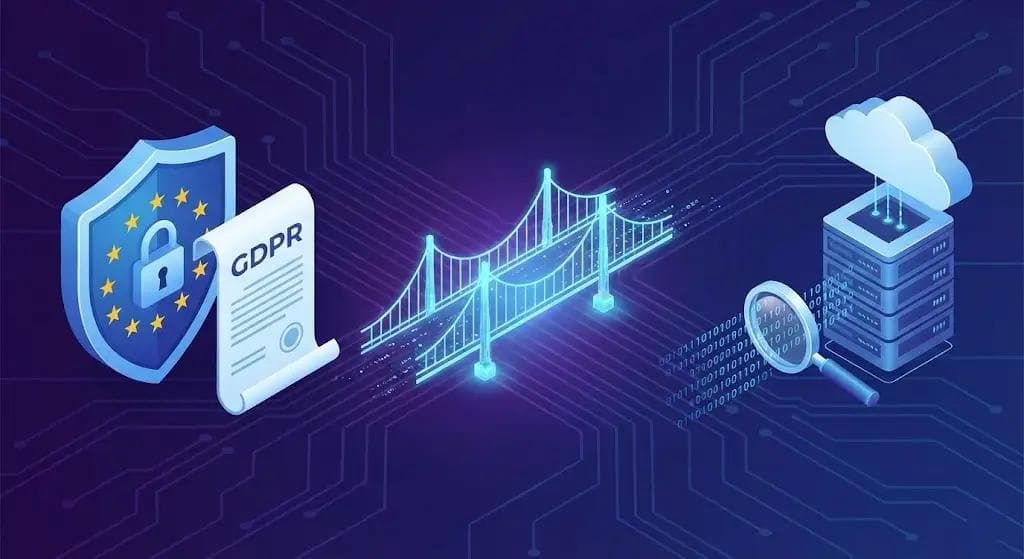
AI and privacy: a responsible approach
AI and privacy: a responsible approach
Using AI in marketing raises important questions about privacy and data ethics. My approach is clear: total transparency and compliance.
- I only use data for which valid and documented consent exists
- AI models are not trained on client data without explicit authorisation
- Full GDPR and European AI Act compliance for all projects
- Clear documentation on how data is processed by AI
Privacy respect follows the same principle I apply when configuring Google Analytics 4 and in consent management.
Concrete ROI: numbers, not promises
Every AI consulting project I manage has clear KPIs defined from the start. It is not about 'innovating' in the abstract — it is about improving specific metrics:
- 40–60% reduction in time spent on repetitive reporting tasks
- 15–25% improvement in lead scoring quality
- Email personalisation with a 20–35% increase in open rates
- Ad budget optimisation with a 10–20% CPA reduction
AI consulting results are measured through the same framework as Google Ads: real data, clear attribution, transparent ROI.
Concrete ROI: numbers, not promises
How It Works
My approach to AI Consulting for Marketing in 5 steps
AI Readiness Assessment
I analyse your data infrastructure, marketing processes, and team skills. I identify high-impact opportunities where AI can generate immediate ROI.
Strategy and use case design
I define the AI strategy with specific use cases, measurable KPIs, and realistic timelines. Every project has a clear business case.
Proof of Concept (PoC)
I develop a working prototype to validate the use case before investing in a full solution. The PoC is the decisive test: it works or it doesn't.
Implementation and integration
I implement the AI solution and integrate it into existing workflows. I train the team on how to use and maintain the system.
Monitoring and optimisation
I monitor AI solution performance with dedicated dashboards. Continuous model optimisation based on real-world results.
Key Benefits
Why choose my approach to AI Consulting for Marketing
Practical AI, Not Theoretical
No slide decks about the AI of the future. Only concrete solutions that solve real marketing problems and generate measurable ROI.
End-to-End Automation
From data collection to decision-making: automated workflows that eliminate repetitive tasks and free up time for strategic activities.
Privacy and Compliance
GDPR, AI Act, ethical AI: every project complies with regulations and uses data transparently and responsibly.
Training and Autonomy
I don't create dependency: I train the team on the tools implemented, with complete documentation to ensure operational autonomy.
Frequently Asked Questions about AI Consulting for Marketing
AI consulting for marketing is a consultancy service that helps businesses integrate artificial intelligence into marketing processes: automation, predictive analytics, personalisation, and campaign optimisation. It is not about 'adding AI' but about solving specific business problems with intelligent tools.
No. AI is accessible to SMEs and freelancers thanks to no-code/low-code tools and pay-per-use APIs. A freelancer can automate reporting, an e-commerce business can implement product recommendations, an SME can improve lead scoring. The scale changes, the principles remain.
Costs vary depending on complexity: a simple automation (e.g. automated reports) has a different cost from a predictive analytics system. I always start with an AI Readiness Assessment to define scope and budget before beginning. Get in touch for a quote.
No. AI is an efficiency multiplier, not a replacement. It automates repetitive, low-value tasks (data entry, reports, categorisation), freeing the team for strategic and creative activities. Final decisions remain human — AI provides better data to make them.
Every project follows a strict privacy protocol: I only use data with valid consent, data is not used to train external models without authorisation, and all solutions are compliant with GDPR and the European AI Act. Privacy is not optional — it is a requirement.
Initial results (task automation) are visible within 2–4 weeks. More complex results (predictive models, personalisation at scale) require 2–3 months for the training and validation phase. I define clear KPIs from the outset so progress is measurable from day one.
Yes, integration with the existing stack is essential. I work with APIs and automation platforms (Make, Zapier, n8n) to connect AI tools to CRMs, email marketing, analytics, and ad platforms already in use. The goal is to enhance, not replace.
Related Services
Tracking Strategy & DataLayer
Custom tracking strategy and DataLayer: from measurement plan to clean, reliable data collection across your entire marketing stack.
Google Analytics 4
Professional GA4 setup: measurement plan, custom events, dashboards and integration with Google Ads and Search Console.
Google Ads Management
Professional Google Ads management: Search, Shopping and Performance Max campaigns optimised for conversions and ROAS, not just clicks.
Interested in AI Consulting for Marketing?
Get in touch for a personalised consultation and find out how I can help you reach your goals.
Book a free consultation